
Antiracism Practice
Remembrance and Racial Justice Working Group
Mission Statement
The Remembrance and Racial Justice Working Group of Old First is a gathering of church members and adherents who seek to learn our church’s history concerning issues of racism, to learn how our actions have directly or indirectly harmed people who have been historically oppressed. We seek to understand and root out the facets of white supremacy we may hold, both explicit and implicit. We endeavor to educate and advocate for policies of inclusion, and for social and racial justice, and to advance healing.
Act Justly
Love Mercy
Walk Humbly
with your God
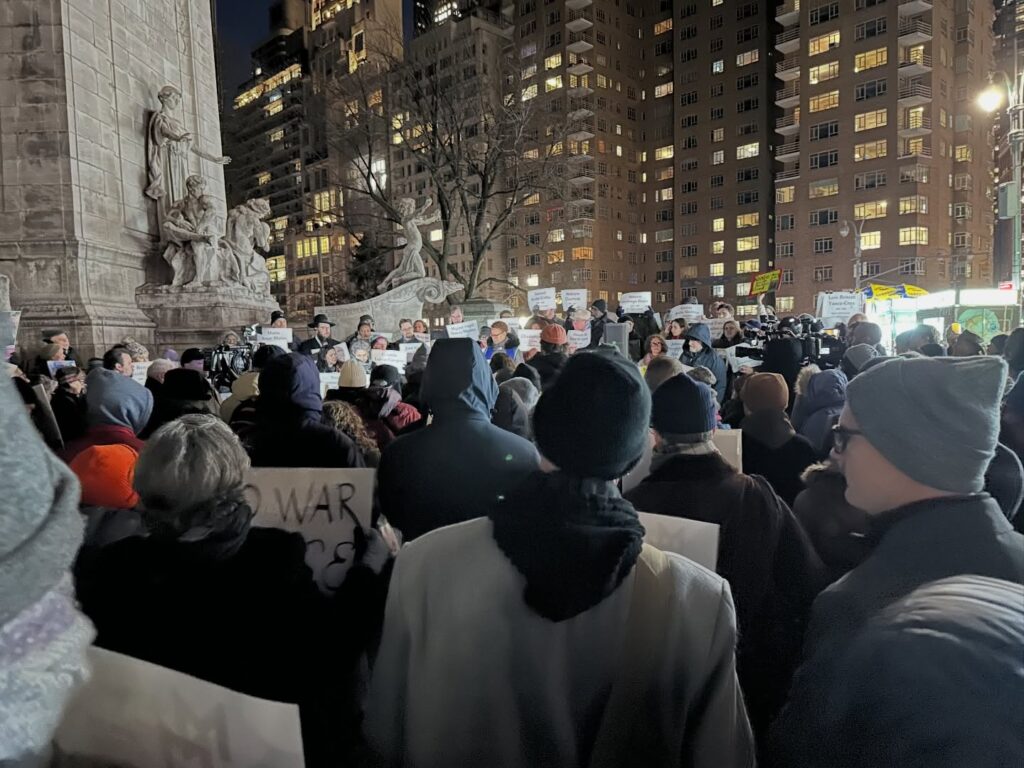
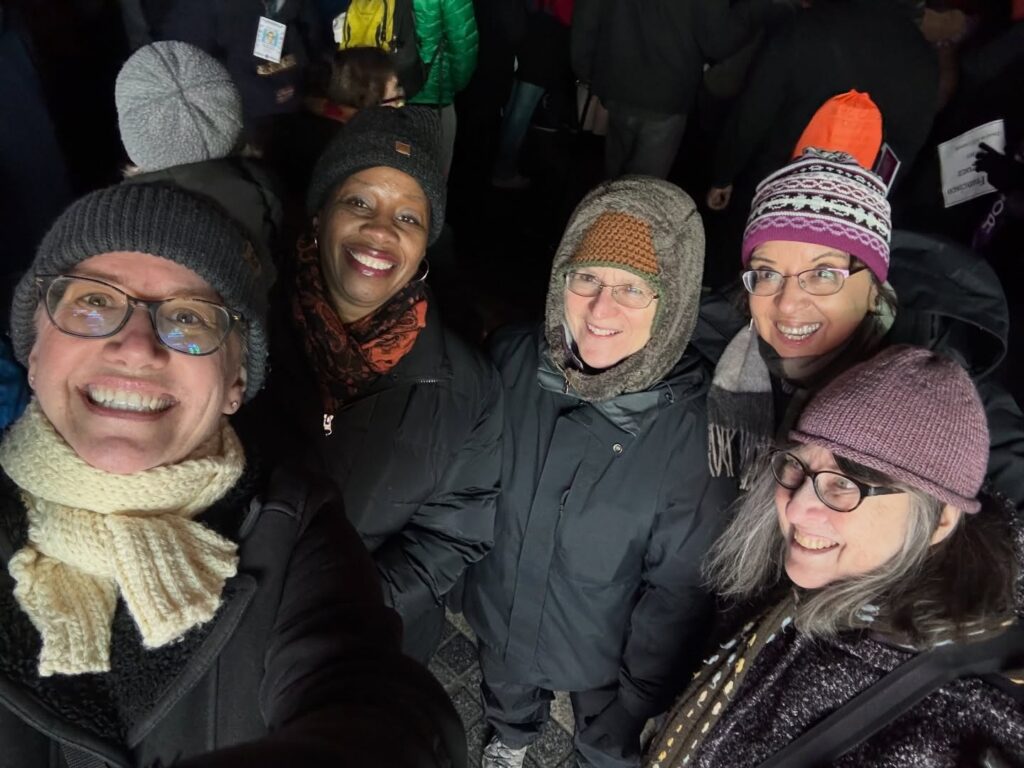
Members of R&RJ gathered at Columbus Circle in January of 2026 where they joined a vigil in remembrance of Rene Good and other immigrants who died in government detention centers last year. The vigil was sponsored by Multifaith Mondays: Moral Witness for Democracy
Naming Project
Old First’s task is to unlearn a long practice of forgetting. Remembering our Forgotten Past is our project to find persons who had been enslaved by our window donors, and name them.
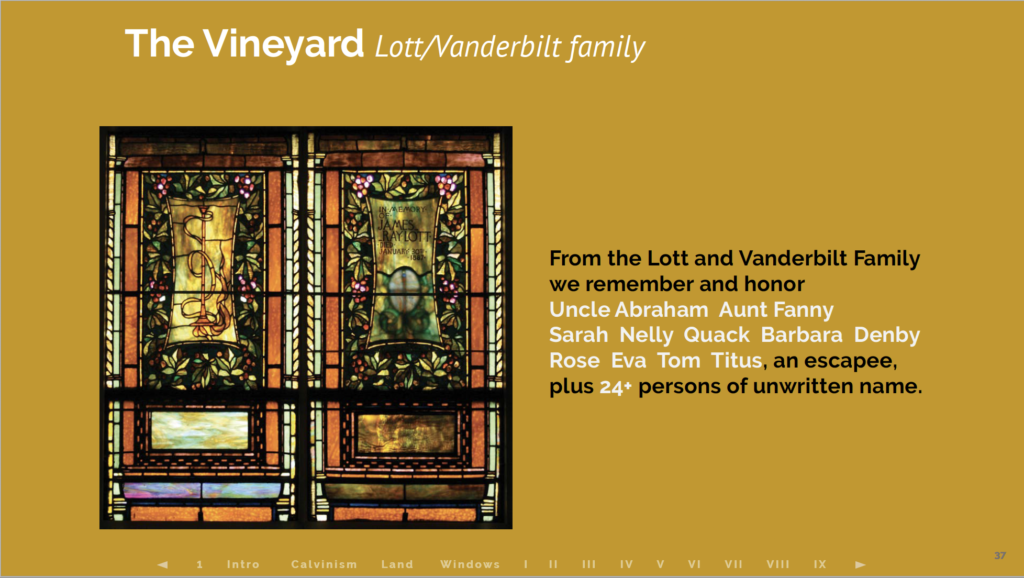
We started by building family trees for the direct-line ancestors of the donors. From this we found their enslaved in documents—some just as numbers in censuses or wills alongside livestock and furniture, some had names recorded but very few included surnames. As the enslaved are found, we remember each name and number on these tiles represents a full, complex human life—someone with a sense of humor, an appreciation for beauty, a spiritual life, griefs and fears and joys. We remember that they were more than given names or numbers—they were people beloved by God, fearfully and wonderfully made, as much a part of the history and legacy of this church as we are. To date, over 540 have been recovered with just over 20 percent of their names, and half a dozen surnames: Simon Jackson likely enslaved by Jacques Cortelyou and buried as “Cato” in Green-Wood Cemetery, Abraham, Fannie, and Fannie Lew Green enslaved by Helena Roosevelt Ray and later by her daughter Elsie Ray Lott in Manhattan and New Jersey, Jacob Porter likely enslaved by Dr. Daniel Kissam on Long Island, Andrew, Samuel, Phebe and Thomas Van Orden likely enslaved by nephews of Ignatius Van Orden in Greene County, New York, Elizabeth Freeman enslaved by Pieter Hoogeboom in Columbia County, New York, and a cousin-connection to Sojourner Truth through Domine Martinus Schoonmaker in Greene County.
“Any time, any time while I was a slave, if one minute’s freedom had been offered to me, and I had been told I must die at the end of that minute, I would have taken it—just to stand one minute on God’s earth a free woman—I would.”
— Elizabeth Freeman
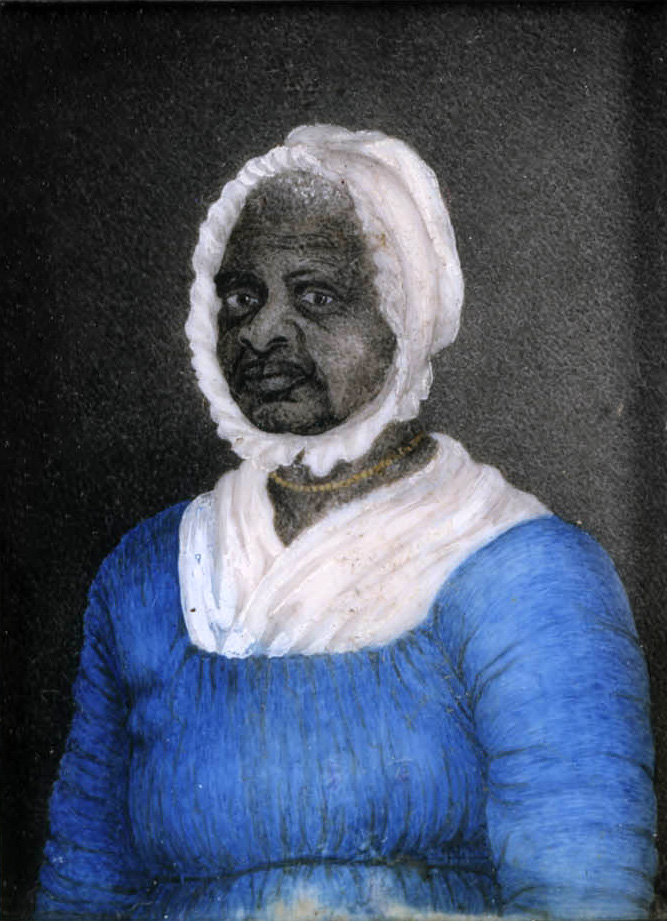
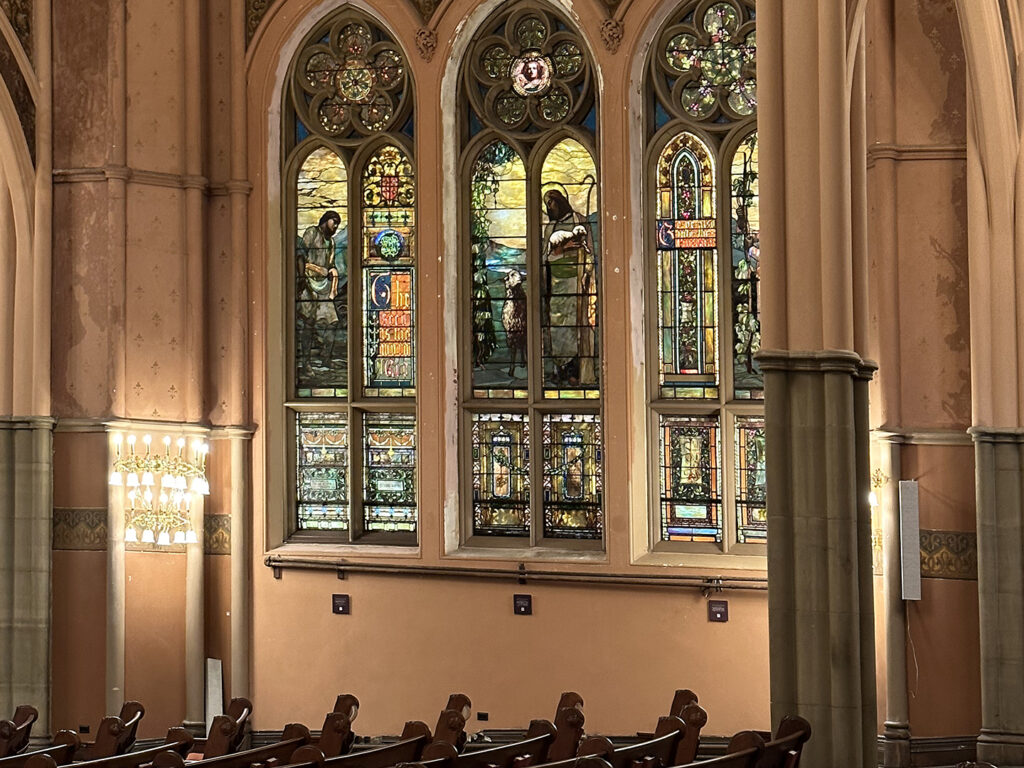
Elizabeth Freeman was born ca 1744 on the plantation of Pieter Meus Hogeboom of Claverack, in Columbia County, New York; a direct ancestor of Mary Jane Gaul, wife of Henry De Witt Van Orden, donor of “The Good Shepherd” stained glass window. At Hogeboom’s plantation she was known as Bet.
When she was about 7 years old, Pieter sent Bet to live with his daughter Annetje (Hannah) and her husband John Ashley in Sheffield, Massachusetts, about 21 miles away. Though now separated from her family it is believed that a younger sister, Lizzy, may have come with her. Hannah Ashley showed no patience with the little girls and at one point she tried to strike Lizzy* with an iron tool, but Bet jumped between to protect her and sustained a deep cut to her arm. Showing her own determination, Bet refused to cover the wound. When asked by anyone, family or guests, what had happened to her she replied, “Ask the Missus.” The story goes that the girls were never struck again and the scar which formed was worn openly, a powerful symbol of resistance.
In 1781, along with another enslaved man and the help of abolitionist lawyer Theodore Sedgwick, Bet filed a lawsuit against Ashley to gain her freedom, citing Massachusetts newly ratified constitution. In August of that year, the court ruled in her favor and after a brief countersuit which was withdrawn by Ashley, she was free. She chose her name, Elizabeth Freeman. This personal action of fortitude led to Massachusetts abolishing slavery in 1783.
After the trial, Theodore Sedgwick employed Elizabeth as the caretaker of his children—his wife suffered from depression and could not care for them—so Elizabeth moved to Stockbridge to work for the family. Elizabeth and the children became very close according to her biographer, Sedgwick’s daughter Catherine, who wrote that the children felt for her as if she were their mother, or Mum, and called her Mumbet. Mumbet is how many people know her today however her true name is Elizabeth Freeman, and this is how she will always be known.
Catherine Sedgewick wrote of Elizabeth, “Mumbet had a clear and nice perception of justice, and a stern love of it, an uncompromising honesty in word and deed, and conduct of high intelligence, that made her the unconscious moral teacher of the children she tenderly nursed… I do not believe that any temptation could have induced Mumbet to swerve from the truth… Truth was her nature—the offspring of courage and loyalty.”
A short biography published online by the League of Women Voters link.
Portrait: Elizabeth Freeman, aged 70, painted by Susan Ridley Sedgwick, ca 1812, watercolor on ivory. Image courtesy of Massachusetts Historical Society, Boston
*The young girl who drew Hannah’s wrath has been variously recorded as Lizzie a sister of Elizabeth’s, as her daughter Little Bet/Betsy, or as an unnamed other young girl, sister or daughter.
Sanctuary Plaques / Remembering our Forgotten Past
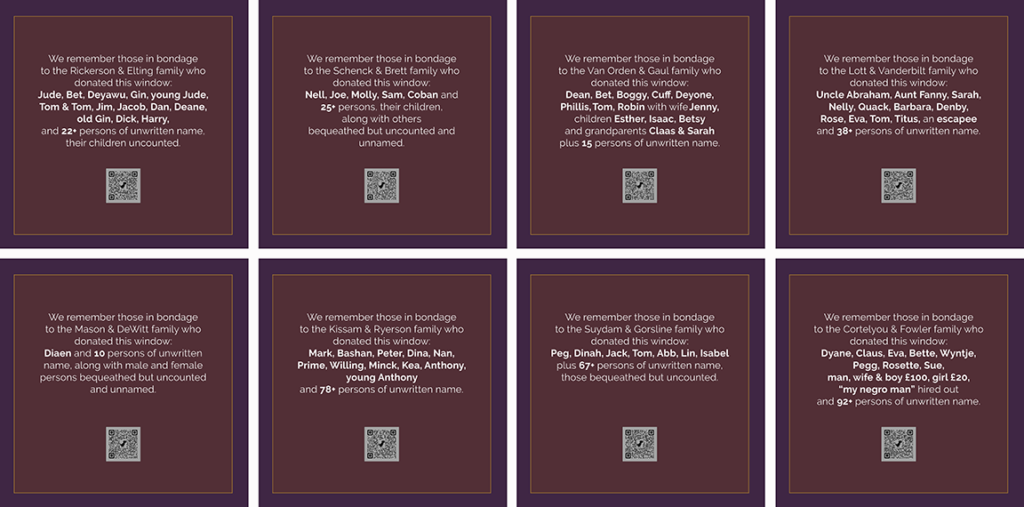
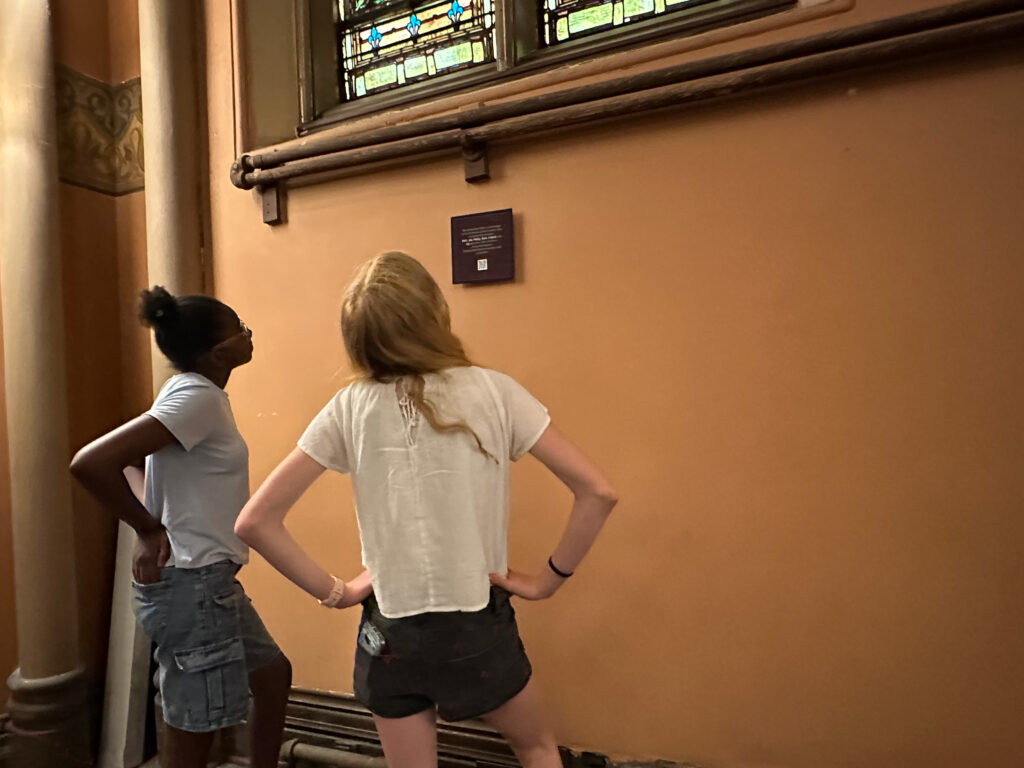
Under each Dutch family’s memorial window is a plaque with numbers of enslaved and their names if known. Each has a QR code where one can read their stories. This information is also reproduced on posters displayed in the Seventh Avenue narthex.
Spaces of Enslavement: A Conversation
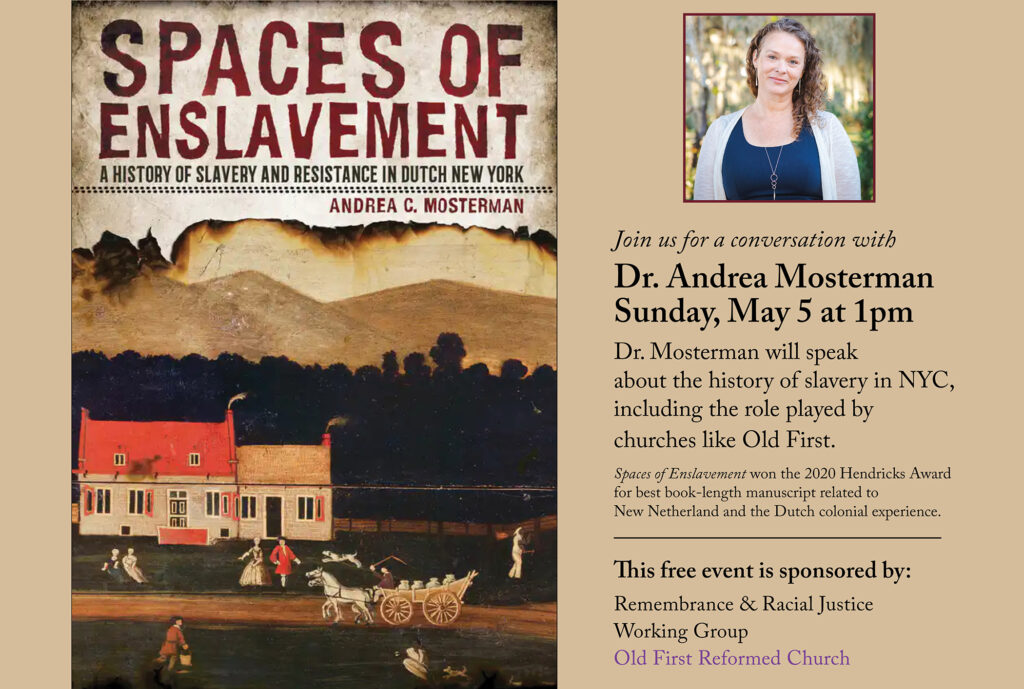
In 2024 Old First hosted a conversation about the history of slavery in New York and the Dutch Reformed Church, given by Dr. Andrea Mosterman followed by an informative Q & A. We are incredibly thankful to Dr. Mosterman for her generosity in sharing her research and time.
Link to recording of event
Link to description of event
The working group meets every other week, please refer to the church calendar.
Contact us for more information at info@oldfirstbrooklyn.org